Serbia does not have a digital nomad visa. I need to be clear about this from the start. Every article that tells you otherwise is wrong. The Serbian government announced plans for Serbia Digital Nomad Visa in 2021.
Media ran with it. Bloggers wrote guides. But the law never passed. The program never launched.
As of 2026, there is no standalone Serbia digital nomad visa with its own application form, fee schedule, or legal category.
What Serbia does have is a set of existing immigration paths that remote workers can use. Some work well. Others are complicated. This guide covers only what I can verify from official sources for Serbia digital nomad visa.
What Serbia Actually Offers
The official government portal welcometoserbia.gov.rs acknowledges digital nomads as a growing presence. It mentions tax incentives and a special visa regime for diaspora returnees. But it does not list a dedicated Serbia digital nomad visa application process. Because one does not exist.
The most reliable path for remote workers is the temporary residence permit based on self-employment or company registration. This is not a Serbia digital nomad visa. It is a general residence permit that happens to work for remote workers who structure themselves correctly.
The official Serbia Residence and Work Portal confirms this. It lists several grounds for temporary residence. Self-employment is one of them. Employment with a Serbian company is another. Family reunification is a third. There is no category labeled digital nomad or remote worker.
Income Requirement: What the Law Actually Says
The average monthly net salary in Serbia in December 2025 was 124,089 dinars, approximately 1,245 US dollars according to Wikipedia citing official data.
However, another source from February 2026 puts the average net salary at 116,127 dinars, approximately 989 euros or about 1,070 US dollars. The variation reflects different months and exchange rates.
For context, the average gross ICT salary in Serbia in 2024 was 2,665 euros per month, representing 92 percent growth since 2020. This is significantly above the national average. Software developers earned an average monthly wage of 310,417 dinars in March 2025, more than double the national average.
The practical reality is that immigration officers want to see proof of stable income. How much? It depends on the officer. Some sources suggest showing at least double the national average. Others say triple. There is no fixed rule. This inconsistency is a feature of the Serbian system, not a bug.
Also: Income requirment is not that hefty when you apply for Digital nomad visa Italy. Take a look at this complete guide.
Serbia Digital Nomad Visa’s Self-Employment Path
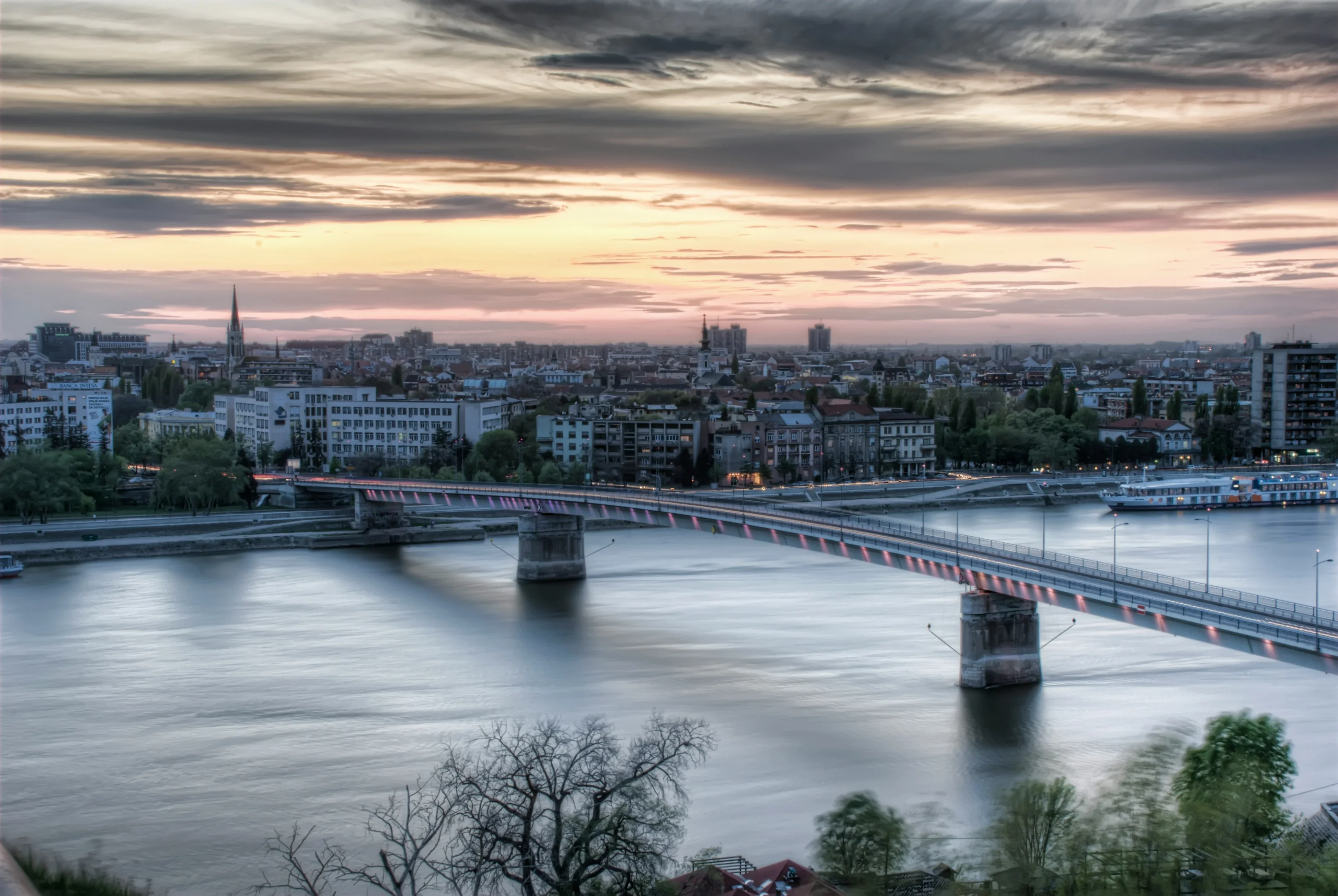
This is the most reliable route for remote workers who want to stay in Serbia long-term. Here is what the process actually involves based on official sources.
First, you enter Serbia on a tourist visa or visa-free entry. Most Western nationals can stay 90 days without a visa. During this period, you must register with local police within 24 hours of arrival. Hotels do this automatically. Private apartments require you to go to the police station yourself. This registration is mandatory and critical for everything that follows.
Second, you apply for a temporary residence permit before your 90-day tourist period expires. The application goes to the local police station or immigration office. The unified permit processing time is approximately 30 days from the date of a complete application.
Third, you register your business activity. For self-employed individuals, this means obtaining a Serbian tax identification number, the PIB. For company formation, this means registering with the Serbian Business Registers Agency.
Fourth, you open a Serbian bank account. Serbian banks are cautious with foreigners. They want to see your residence permit, your PIB, and proof of Serbian address. Some banks refuse non-residents entirely. Raiffeisen, UniCredit, and AIK Bank are generally more foreigner-friendly than local institutions.
Tax Situation for Serbia Digital Nomad Visa
Serbia’s personal income tax is progressive, not flat. The rate ranges from 10 percent to 20 percent depending on income level. The 10 percent rate applies to lower brackets. Higher earners pay 15 percent or 20 percent.
Social contributions for self-employed individuals are approximately 20 percent of income, covering pension and health insurance.
If you stay fewer than 183 days in a calendar year, you are generally not a tax resident. Serbia taxes only your Serbia-sourced income. Since your remote work income comes from foreign clients or employers, you would owe zero Serbian income tax. This is the scenario most short-term nomads operate under.
If you stay 183 days or more, you become a tax resident. You are then taxed on worldwide income at the progressive rates. Serbia has double taxation treaties with over 60 countries. These prevent double payment if your home country also taxes your worldwide income.
Corporate tax for LLCs is 15 percent. This is verified by multiple sources. If you form a Serbian company and pay yourself a salary, you face corporate tax on profits plus personal income tax on salary. The structure matters. Get a Serbian accountant to optimize it.
The Duration: What the Law Actually Says
The temporary residence permit can be issued for up to three years. This is the maximum under law. However, new applicants typically receive shorter permits initially, often six months to one year. Renewal is possible and depends on continued business activity, tax compliance, and the discretion of the immigration officer.
Permanent residence is possible after three years of continuous legal residence. After three years, you can apply for permanent residence. After five years of permanent residence, you can apply for Serbian citizenship.
Cost of Living: Verified 2026 Numbers
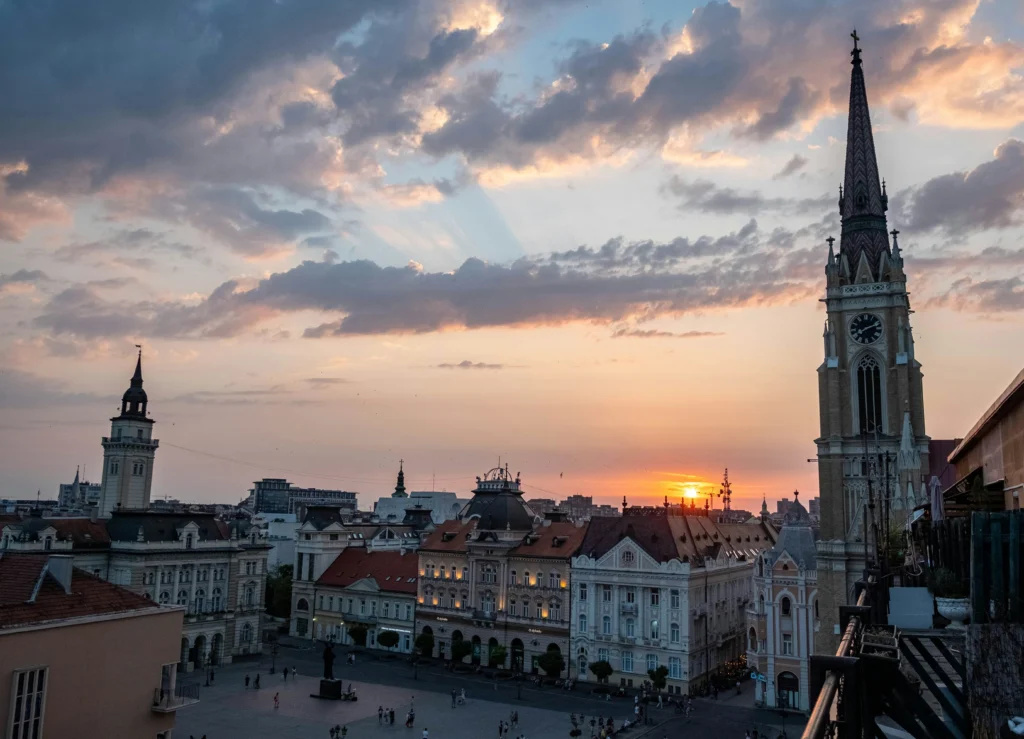
A single person in Belgrade needs approximately 1,200 to 1,500 euros per month for a comfortable life including rent, food, transport, and utilities. This is roughly 38 percent lower than Germany. A one-bedroom apartment in central Belgrade costs 400 to 800 euros per month. Outside the center, 300 to 500 euros.
Utilities for a standard apartment run 100 to 180 euros monthly. Internet is 25 to 40 euros for fiber optic. Mobile data is cheap and reliable. A meal at a mid-range restaurant is 10 to 20 euros. Street food and local markets are significantly cheaper.
Public transport in Belgrade is free as of January 1, 2025. This was announced by the city government and confirmed by multiple sources. It applies to all residents and visitors using trams, buses, and trolleybuses.
Coworking spaces in Belgrade range from 100 to 200 euros per month for a hot desk. Smart Office, Nova Iskra, Startit, and ICT Hub are established names. Most offer day passes for 10 to 15 euros.
The ICT Sector: Verified Growth Data
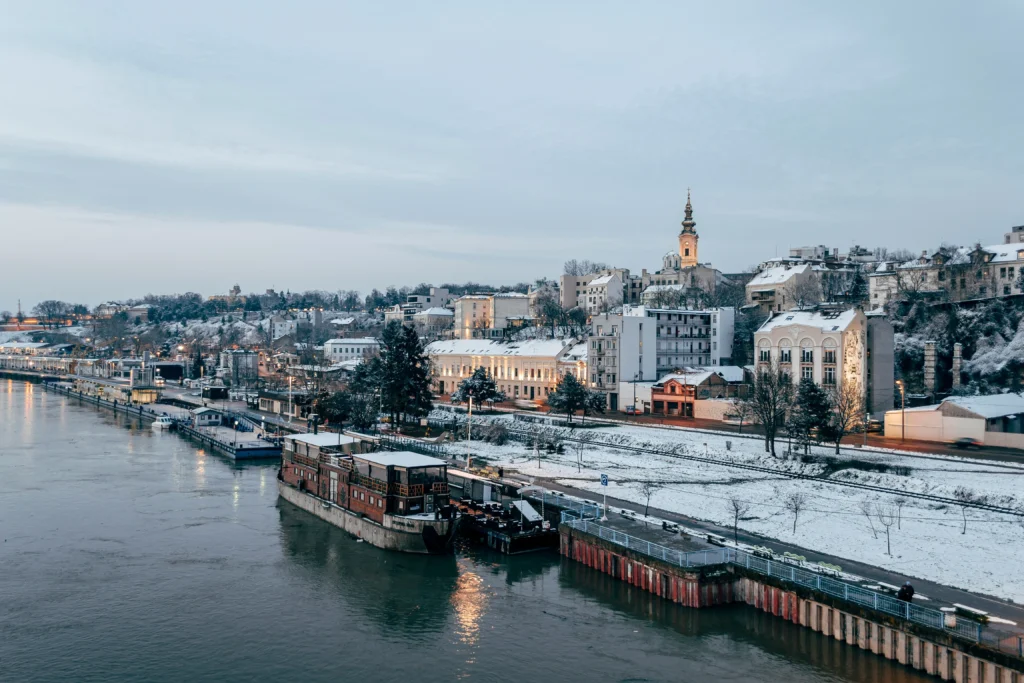
Serbia’s ICT sector is genuinely strong. This is not hype. The numbers are verified by official sources.
ICT service exports reached 4.552 billion euros in 2025, a 10 percent increase from 2024. This is a record high. The sector has grown tenfold since 2012 when exports were just 375 million euros.
In 2024, ICT service exports were 4.1 billion US dollars according to the US Department of Commerce. ICT exports represent 5.02 percent of GDP and value added is 8.51 percent. The sector employs approximately 115,000 to 126,000 people across more than 4,000 companies.
The average gross ICT salary in 2024 was 2,665 euros per month, up 92 percent since 2020. This is significantly above the 63.4 percent average wage growth across all sectors. ICT employment grew 39 percent since 2020 while total employment remained flat.
The government has invested in digital infrastructure. A state-owned data center in Kragujevac hosts national ICT infrastructure including an Nvidia-powered supercomputer for AI research. Oracle opened its first regional private data center there in 2022.
However, the government terminated a key incentive for hiring foreign professionals in July 2025. The Regulation on Incentives for the Employment of Foreigners, introduced in 2022, was scrapped. The government cited a surge in foreign applications. Industry leaders criticized the move, warning it could drive tech talent away.
The EU Accession Status
Serbia applied for EU membership on December 22, 2009. It was granted candidate country status on March 1, 2012. Accession negotiations opened on January 21, 2014.
As of the latest official data, 22 negotiation chapters are open and two are provisionally closed. This is confirmed by the Robert Schuman Foundation, a reputable EU policy think tank. Full membership is not imminent. Serbia is not a Schengen member. Your Serbian residence permit does not grant visa-free travel to the EU.
Real Problems
The bureaucracy is inconsistent. One immigration officer approves your application in 30 days. Another requests additional documents and delays you for months. There is no standardization.
The language barrier is real outside central Belgrade. Official documents are in Serbian. Some offices have English speakers. Others do not.
The 90-day tourist window is tight. You must complete police registration, find accommodation, gather documents, apply for residence, open a bank account, and register your business all within 90 days.
The Bottom Line
Serbia digital nomad visa is a genuinely good option for remote workers who want low costs, a growing tech ecosystem, and central European location. But it is not for beginners.
There is no Serbia digital nomad visa. The path that exists requires navigating a general immigration system not designed for remote workers.
If you want a plug-and-play Serbia digital nomad visa with a clear application form, go to Croatia or Portugal. If you want to save money on taxes and living costs and you are willing to figure out the paperwork, Serbia works.